

Using Natural Stone Tones to Give Gardens More Character
A garden can feel completely different when color is introduced through the materials underfoot and around planting areas. Greenery naturally provides plenty of variation, but stone adds another layer that can make the whole setting feel richer and more considered. For homeowners exploring colored landscaping stones, the choice is not simply about picking a favorite shade. Warm creams, earthy browns, subtle grays, and deeper tones can each influence the mood of a patio, border, walkway, or decorative feature. When the color works with the house and surrounding landscape, stone can bring separate areas together while still allowing the garden to keep a relaxed, natural appearance.
Warmer stone shades tend to create a welcoming feeling, particularly around seating areas, patios, and flower beds. Soft beige, tan, rust, and muted brown tones can sit comfortably beside timber, brick, and traditional architecture. They can also make planting colors appear more vivid without competing for attention. Cooler shades create a different effect. Gray and blue-gray stones often suit cleaner designs, modern homes, and spaces where simple lines are part of the overall look. Neither approach is automatically better, the key is choosing tones that support the atmosphere already developing around the property.
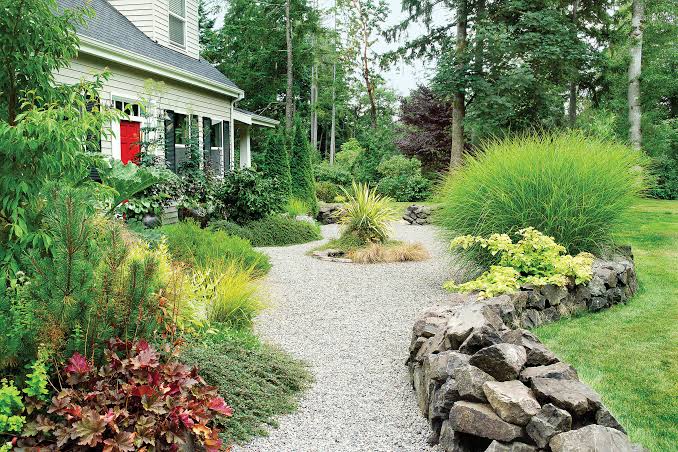
Contrast can be useful too, especially when an outdoor area lacks definition. Light-colored stone placed beside dark mulch or deep green planting can brighten a shaded corner, while darker stone can make pale flowers or lighter paving stand out more clearly. Even small changes can have an impact. A narrow stone border around a lawn, a decorative strip beside a walkway, or a carefully filled area around a feature tree can introduce color without requiring a major renovation. Natural variation also prevents the result from feeling overly uniform, which helps the space look less manufactured and more connected to the outdoors.
It also helps to consider how stone colors appear at different times of day. Bright sunlight can make lighter shades look almost reflective, while rain may deepen darker tones and reveal patterns that are less noticeable when dry. Nearby surfaces matter as well. Brick, siding, fences, roofing, retaining walls, and outdoor furniture all contribute to the visual background. Rather than matching everything exactly, choosing complementary shades usually creates a more interesting result. A garden often feels more inviting when its materials relate to one another without looking as though every color was selected from the same sample card.
The best outdoor designs usually have enough personality to feel distinctive, but not so much that every feature competes for attention. That balance is where colored landscaping stones can be especially useful. They can introduce warmth, contrast, softness, or structure depending on the shade and where it is placed. Whether the goal is to refresh a tired border, define a pathway, brighten a patio edge, or add visual depth around planting, natural stone color can quietly transform the space. With thoughtful selection, homeowners can create gardens that feel coordinated, expressive, and comfortable, while allowing the changing textures and colors of nature to remain the main attraction.